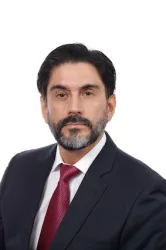
I am an international education expert with over 25 years of experience in leading education reforms, public policy design, and institutional capacity building across Latin America and the Caribbean. I have directed university distance education systems impacting more than 10,000 students, managed cooperation portfolios of up to EUR 2 million annually, and supervised teams of up to 145 direct and indirect staff. My experience includes serving as Country Representative Director for the OEI in Honduras and providing technical advisory services to ministries of education in more than ten countries. I have a documented track record with leading multilateral and cooperation agencies such as UNESCO, UNDP, UNICEF, GIZ, European Union, World Bank, IDB, USAID, and AECID. I am also an author of more than 15 textbooks published by international publishers and a doctoral candidate at UNED (Spain).
Skills
- Educational institution leadership and management
- Public education policy design and evaluation
- Portfolio and budget administration (up to EUR 2M)
- Multidisciplinary team supervision
- Institutional strengthening and capacity development
- Competency-based curriculum reform and development
- Distance education and digital educational transformation
- Monitoring, Evaluation and Learning (MEL / MELP)
- International technical cooperation (USAID, EU, WB, UN)
- Early childhood, inclusion and educational equity
- Educational research (mixed methods)
- Governance, audit, and institutional accountability
Licenses and certifications
- SCRUM Product Owner - Udemy 2024
- Information Security - GIZ 2023
- Use of Information for Educational Planning - UNESCO IIPE, Argentina 2023
- Responsible Use of AI in the Public Sector - IDB 2023
- Active Learning Lab - Presence Institute 2021
- Human Rights - United Nations 2020
- Ethics and Integrity - United Nations 2020
- UNDP Legal Framework - United Nations 2020
- Identifying Fraud and Corruption - UNFPA 2020
- I Know Gender - UN Women 2017
- Basic Security in the Field - UN DSS 2017
listed
Work Experience
Leads the design and implementation of the evaluation system for an education reform pilot project, leveraging artificial intelligence and state-of-the-art technology platforms. Designed three integrated evaluation models: process, progress, and outcomes. Coordinates the design of monthly assessments and year-end competency-based tests grounded in Item Response Theory (IRT). Manages technical coordination across pedagogical, technology, and measurement teams to ensure system coherence.
Full financial, administrative, and legal responsibility for the country office: annual portfolio of approximately EUR 2 million, funded by AECID, AEXCID, EU, and Comunidad de Madrid. Supervised 25 direct staff and 120 indirect personnel (145 total); led recruitment, performance appraisal, and institutional capacity development. Directed donor reporting, participated in external audit processes, and developed corrective action plans. Formulated and negotiated technical cooperation projects valued between EUR 500,000 and EUR 1,000,000 annually. Represented the organization before national authorities, cooperation agencies, and multilateral bodies. Promoted public-private partnerships and expanded institutional coverage, aligning local policies with international quality standards.
Directed the restructuring and modernization of the distance education system, benefiting more than 10,000 students. Managed a team of 12 direct staff and approximately 90 indirect collaborators (102 total); oversaw operational planning, academic coordination, and financial administration. Participated in institutional audit processes and implemented corrective action plans. Formulated institutional policies and comprehensive development plans for the distance learning modality, including the virtualization of undergraduate programs. Led the creation of an inter-university network of distance education systems across Central America. Strengthened governance mechanisms and academic quality assurance processes.
Coordinated technically across multiple government stakeholders in the MEC, building the capacity of approximately 2,500 Ministry of Education and Science officials. Designed and implemented capacity-building plans at central, departmental, and local levels. Ensured compliance with EU contractual standards and implemented structured donor reporting systems. Integrated environmental risk considerations and inclusion criteria (indigenous communities and gender) into education reform processes. Updated procedural standards aligned with e-government principles and transparent governance.
Designed and implemented a comprehensive institutional strengthening and training strategy for more than 3,000 field consultants nationwide. Coordinated with the National Civil Registry (RNP) on the modernization of the national biometric digital identification system. Managed political risk variables in coordination with national authorities and under UNDP standards. Contributed to institutional frameworks for transparency, governance, and regulatory compliance. Supervised the design of the sustainability plan and monitoring and evaluation system for the program.
